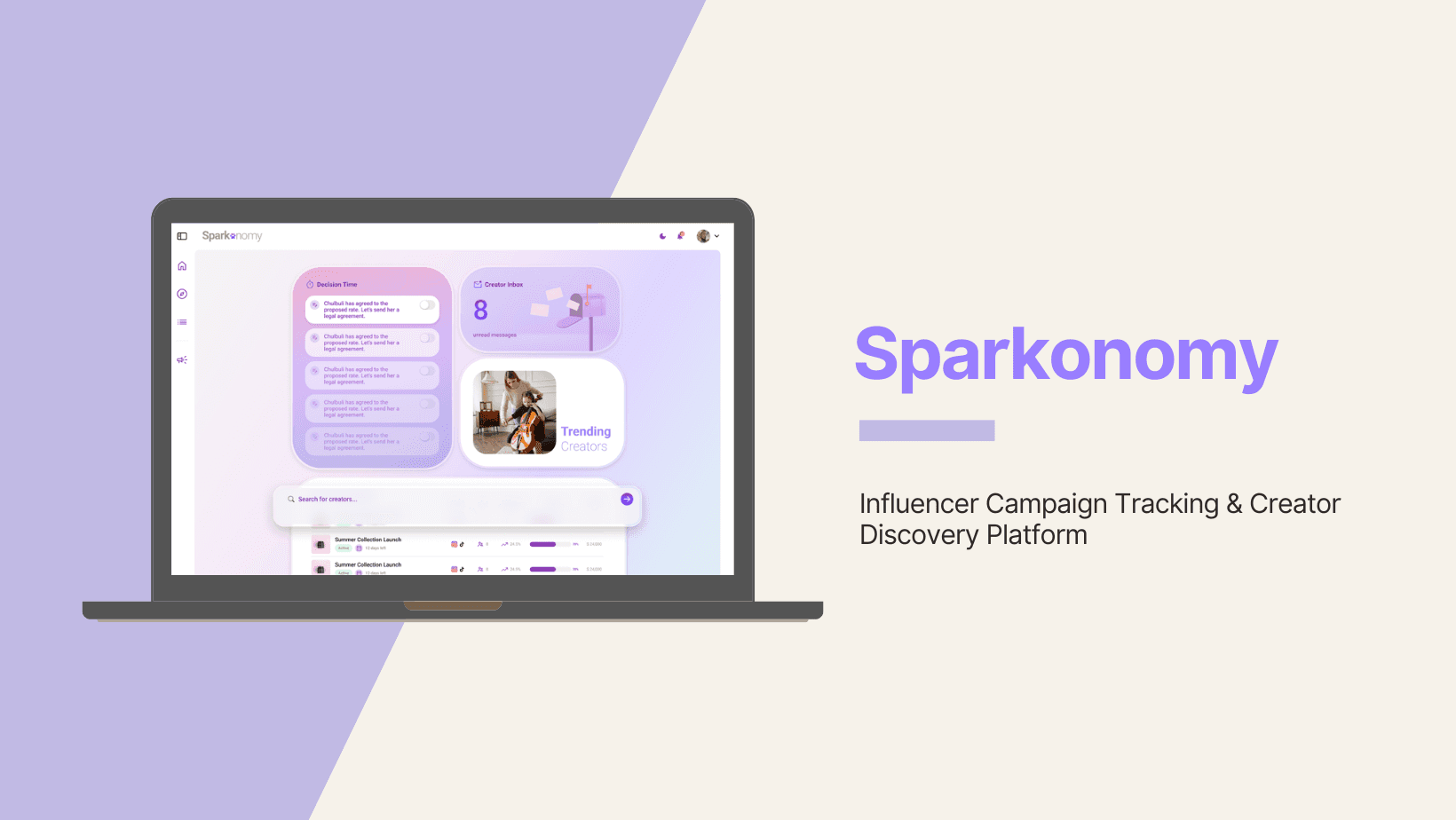
Sparkonomy
Influencer Campaign Tracking & Creator Discovery Platform
Sparkonomy is a creator discovery and campaign tracking platform that helps brands:
Discover relevant influencers
Launch trackable campaigns
Monitor real-time performance
Manage creator submissions and opt-ins
My Role
Product Designer
Tools
Figma • Research • Data Visualization • Prototyping
Duration
6 months
Problem Statement
Brands struggle with:
Manually finding relevant influencers
Tracking campaign performance across platforms
Verifying creator submissions
Managing opt-in / opt-out compliance
Getting real-time campaign insights
Meanwhile, creators face:
Confusing onboarding
Manual link submissions
Poor performance visibility
Complicated verification processes
The ecosystem lacked a seamless bridge between brand goals and creator execution.
Challenge
Sparkonomy wasn’t a feature problem — it was a system problem.
It connects brands and creators across an entire campaign lifecycle, but both think differently.
Brands seek control, analytics, and visibility.
Creators want speed, simplicity, and trust.
Behind the scenes, the platform relied on verification flows, scraping, tracking links, opt-ins, and real-time monitoring.
The real UX challenge was:
How do we make a complex, automation-heavy system feel simple and human for both sides?
It wasn’t about adding features —
it was about structuring logic and edge cases into a clean, guided experience.
Goals
The product aimed to turning a complex system into a structured, usable experience:
Separate mental models clearly for brands (control & analytics) and creators (speed & simplicity).
Reduce cognitive load by breaking workflows into guided, decision-based steps.
Design for edge cases, not just happy paths, ensuring stability across verification, opt-ins, and submissions.
Structure data hierarchically so dashboards feel clear, not overwhelming.
Make automation feel trustworthy through visible confirmations and fallback states.
The goal wasn’t just to design screens —
it was to design a reliable interaction system.
Research & Key Insights
Through stakeholder discussions and competitor analysis:
Insight 1:
Brands want control + automation
→ We created advanced filters + smart search triggers.
Insight 2:
Creators don’t trust complex verification flows
→ We simplified OTP + profile scrape validation.
Insight 3:
Campaign managers need clarity
→ We introduced structured dashboard layers:
Campaign Level
Creator Level
Real-Time Tracker
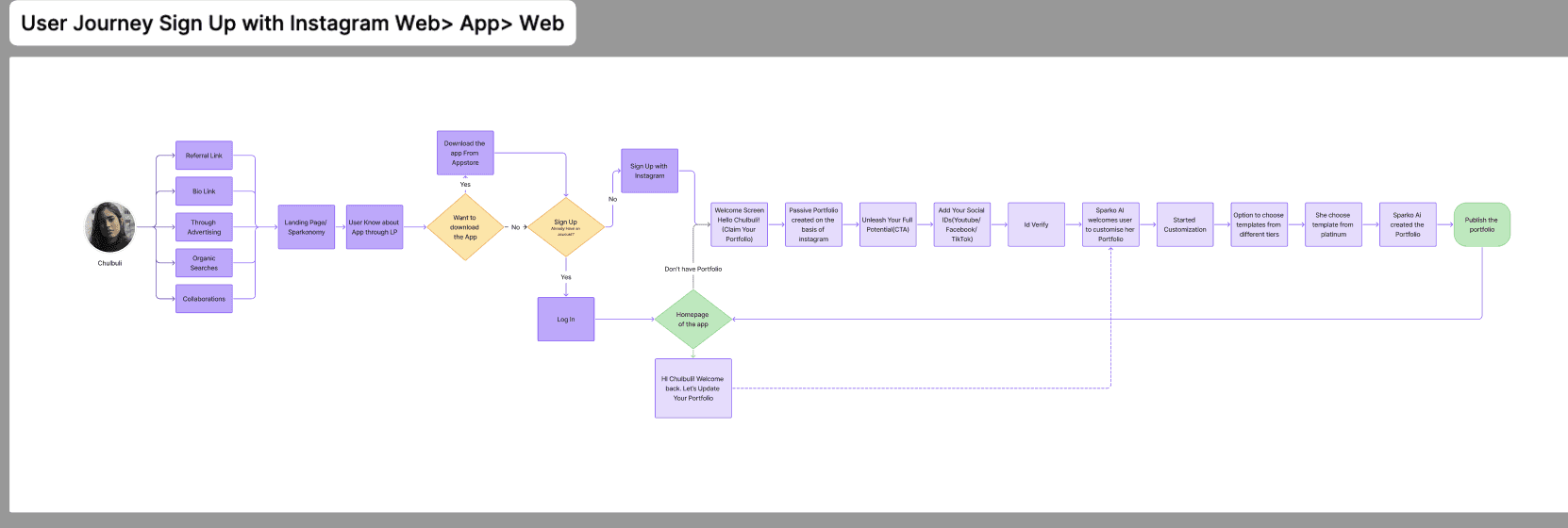
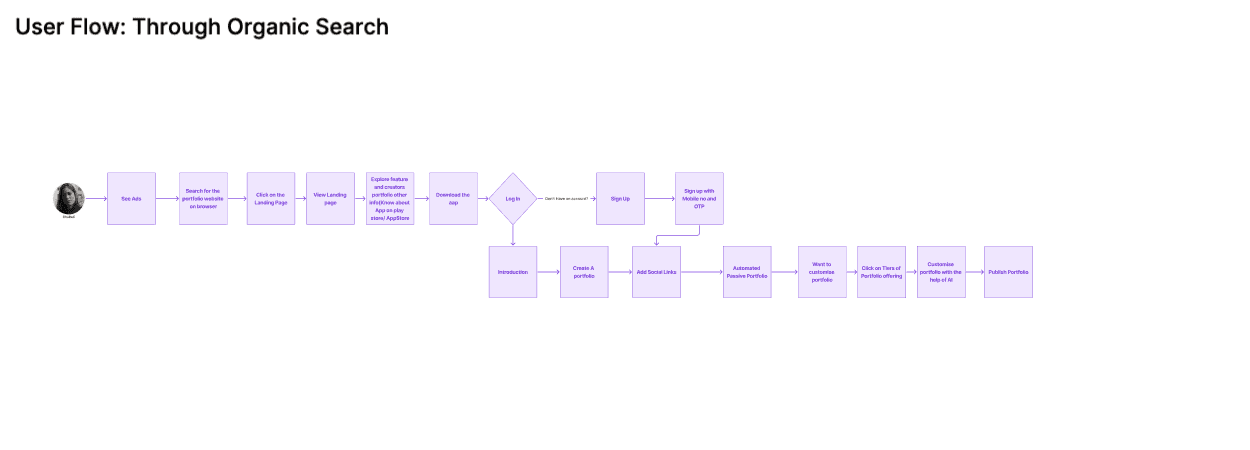
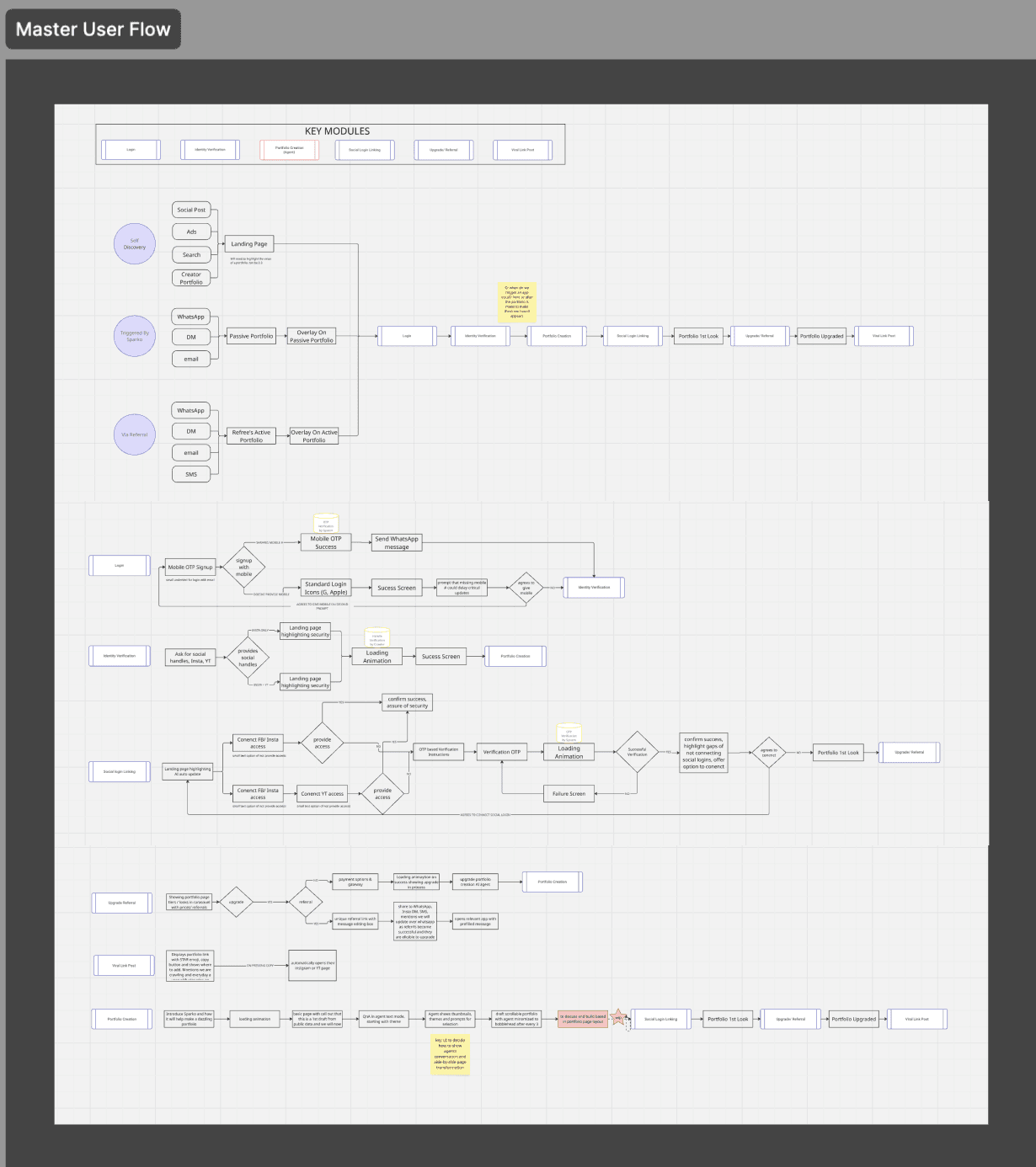
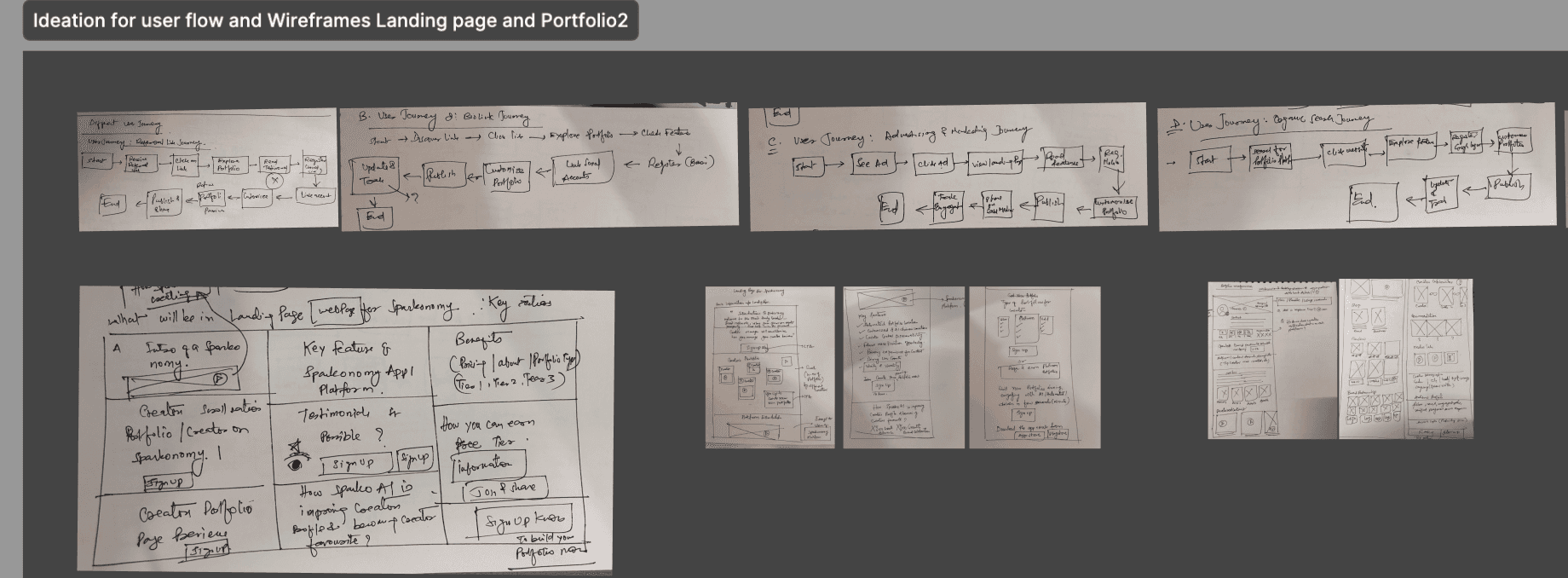
User Journey Architecture
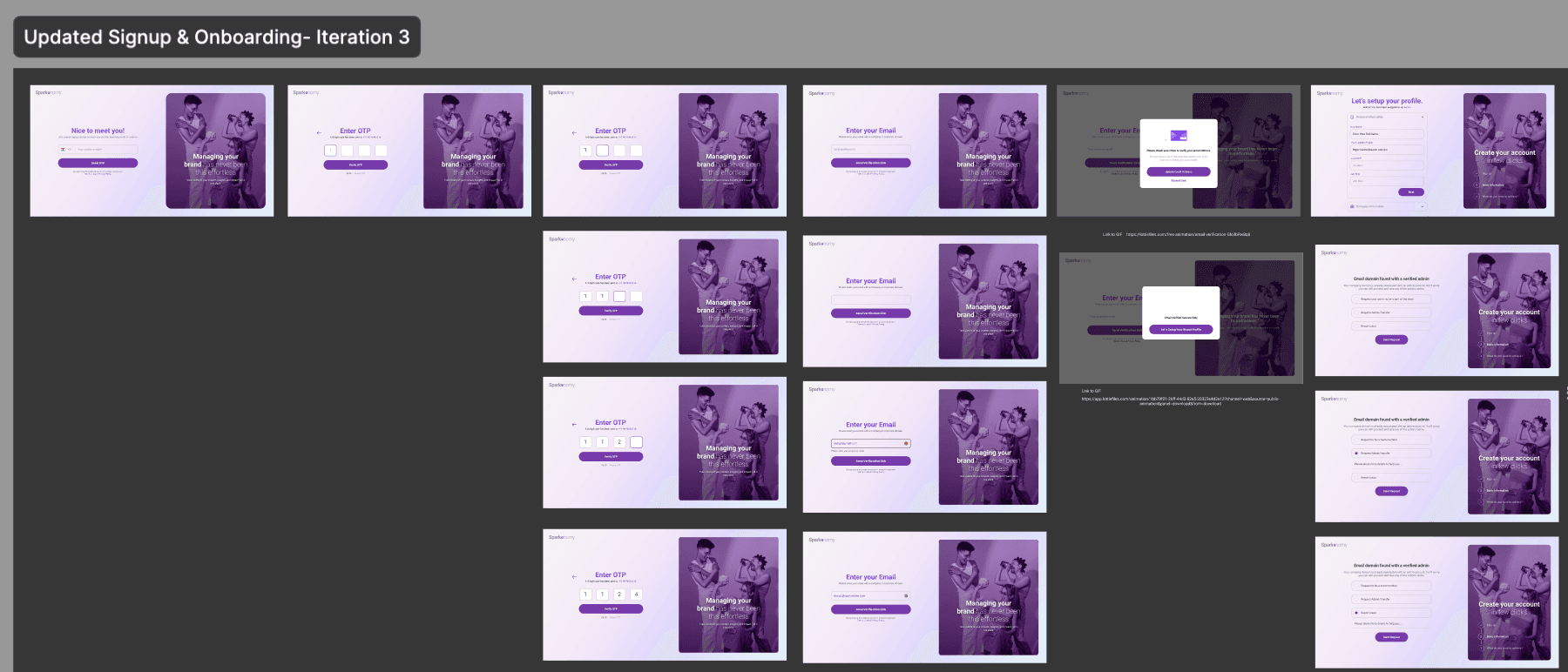
Brand Onboarding Flow
Sign up via OTP
Corporate email verification
Admin assignment
LinkedIn profile + website scraping
Organization detection
Profile setup
Designed to validate brand authenticity while reducing friction.
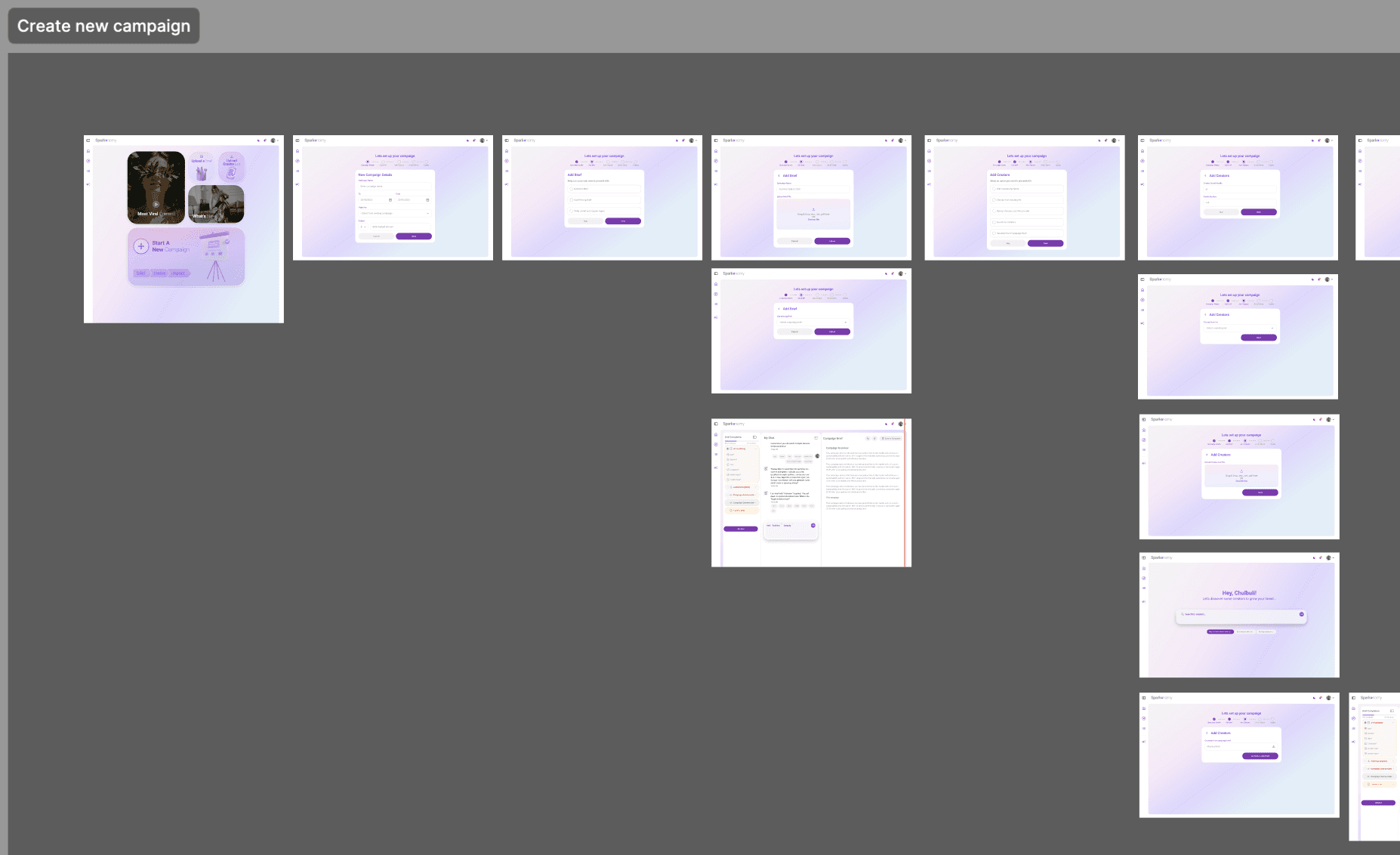
Campaign Creation Flow (Web)
Start Campaign Tracking
Enter campaign details
Scrape brand URL (auto-detect data)
Define target filters (gender, category, followers, tags)
Generate campaign input page
Create sharable RTC (Real-Time Campaign) link
Add Creators (3 Methods)
Manual entry
Choose from Sparkonomy list
Upload CSV file
Share Campaign
Sparkonomy WhatsApp integration
Direct creator link
Mobile share
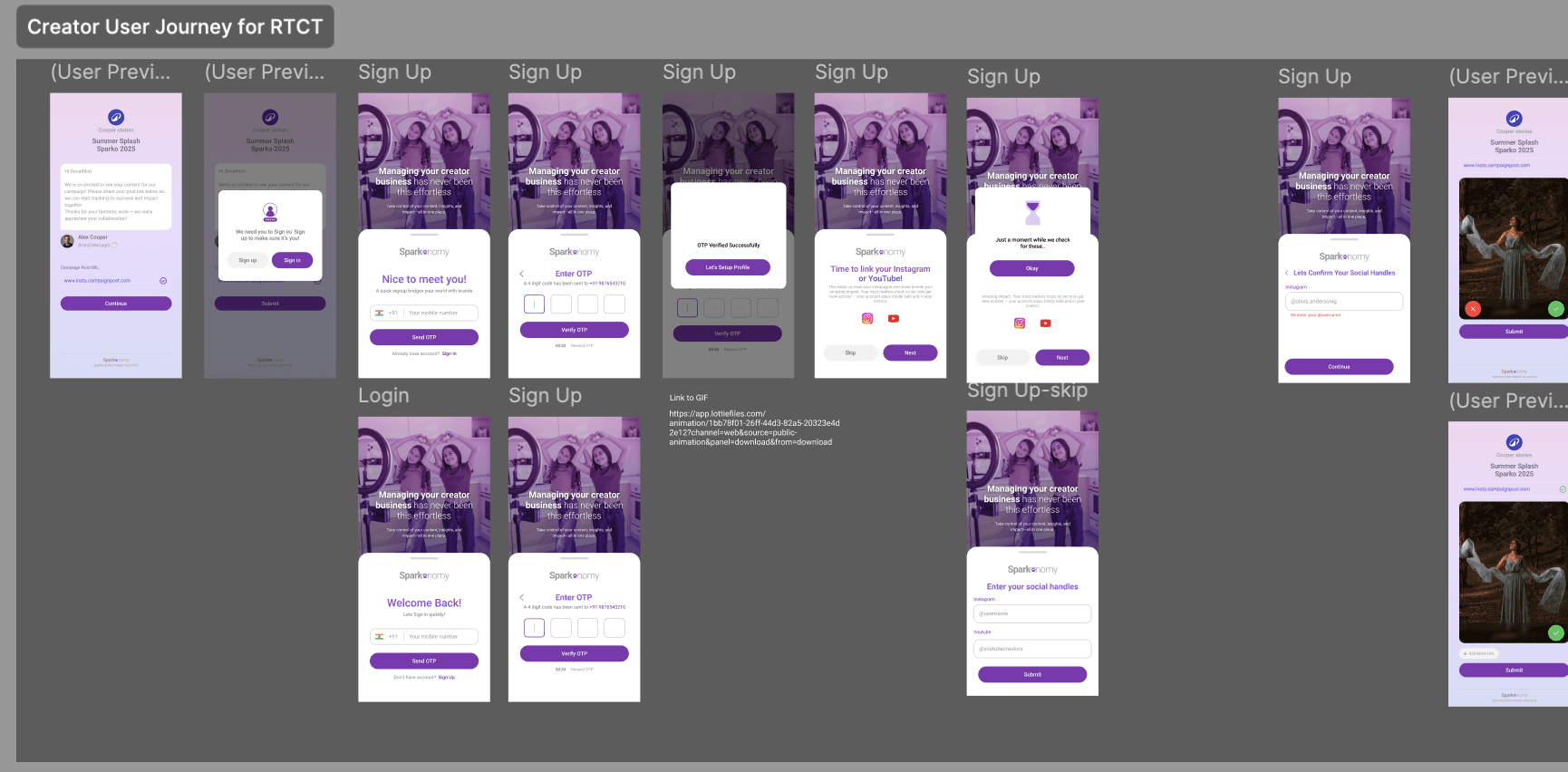
Creator Participation Flow (Mobile)
Receive campaign link
Sign up / Sign in
Social handle submission
OTP verification
Auto scrape profile
Submit post URL
Opt-in / Opt-out confirmation
Performance updates
Final report
We reduced cognitive load by converting this into a guided step-by-step interaction.
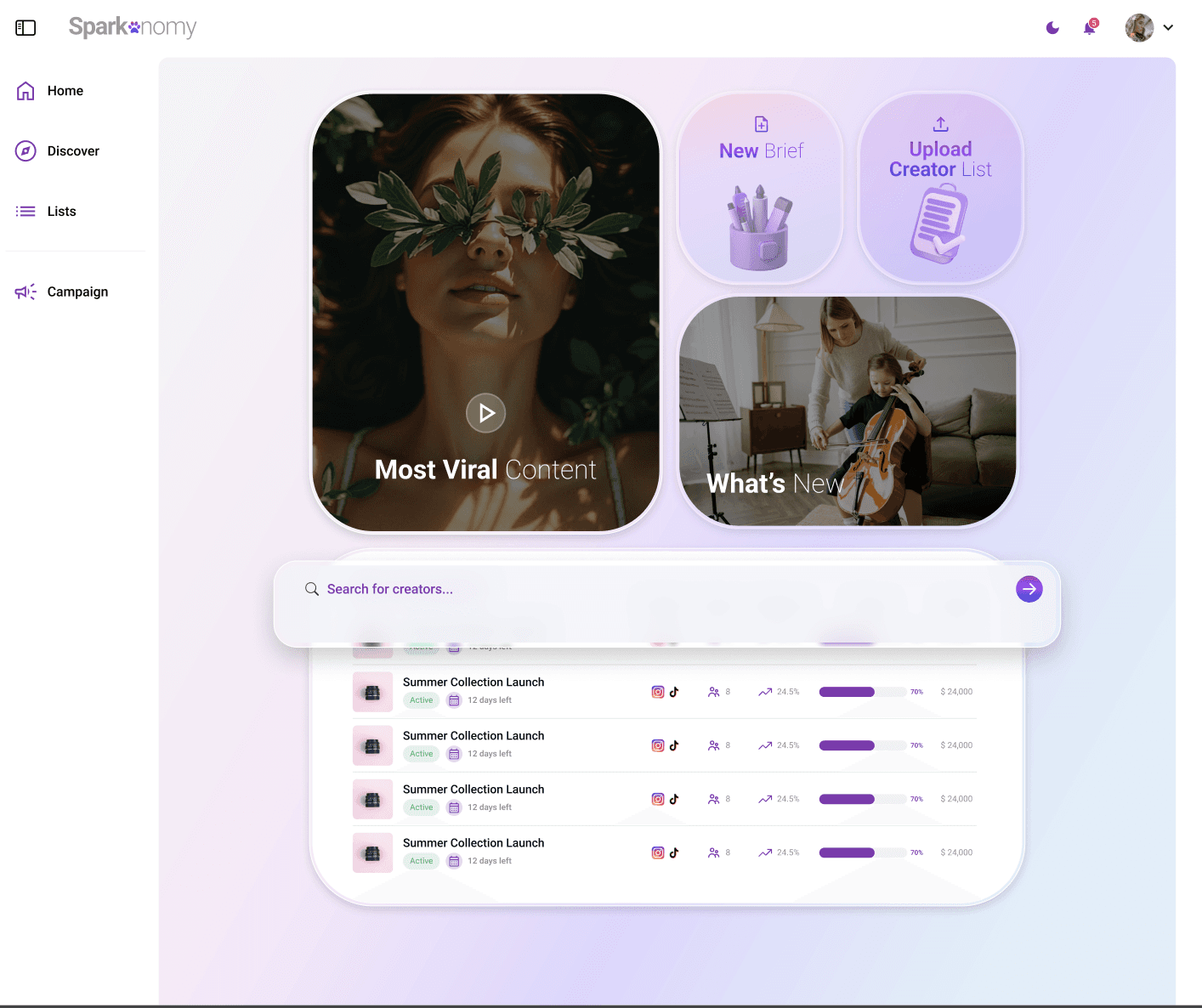
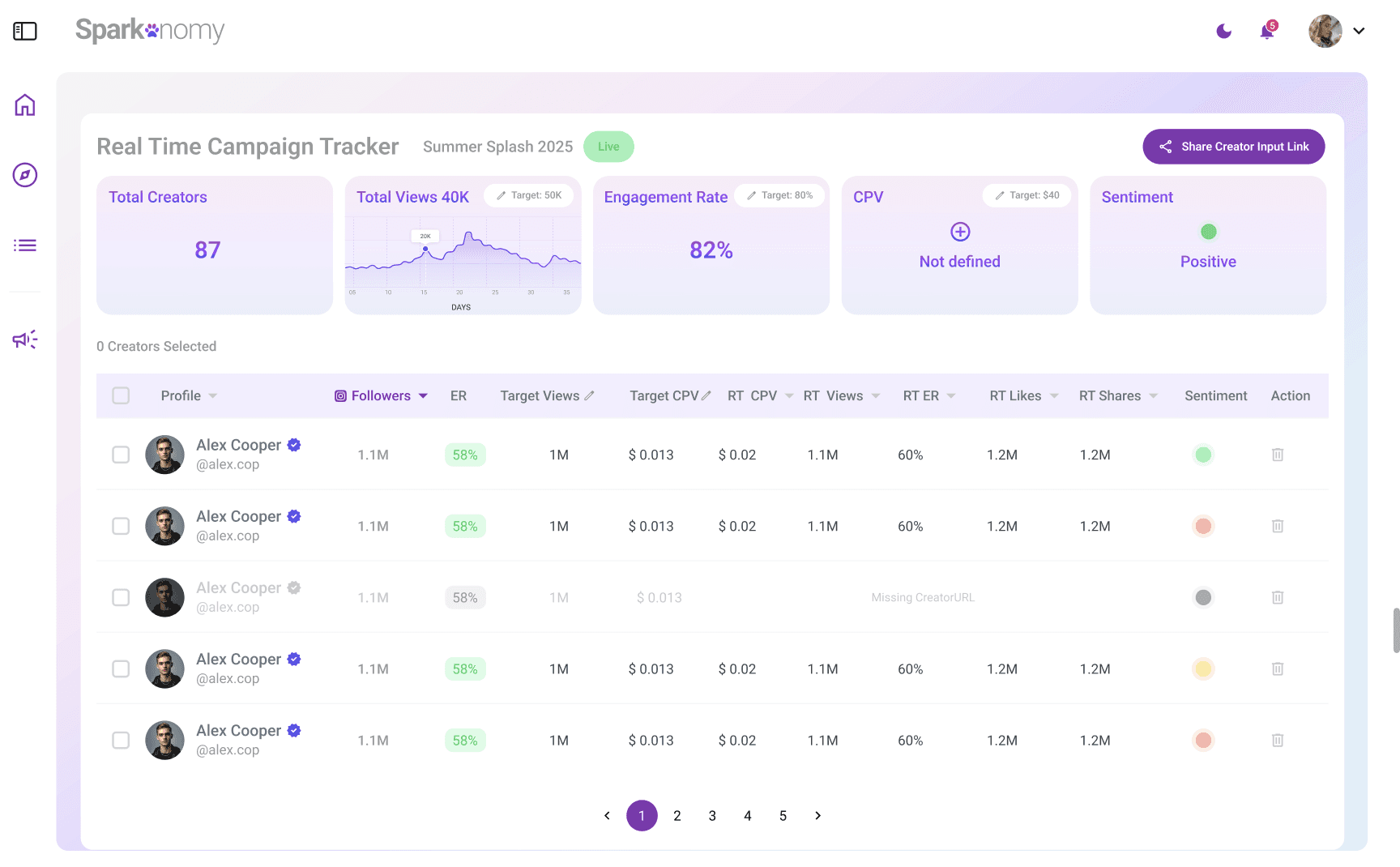
Dashboard Experience
We structured analytics into 4 clarity layers:
1. Campaign Level
Budget
Total creators
Engagement metrics
Completion status
2. Creator Level
Post submission status
Opt-in status
Individual performance
3. Real-Time Tracker
Live updates
Alerts
Campaign heatmap
4. Deep Dive Analytics
Aggregate performance
ROI insights
Platform breakdown
The Solution
We designed a structured, system-driven campaign engine with:
AI-assisted creator search
Campaign tracker page generator
Social profile verification system
Opt-in/out automation
Real-time dashboard
Submission alerts & performance tracking
Everything was built as a connected workflow — not isolated features.
UX Decisions That Made Impact
✔ Clear Role Separation
Brand and Creator flows were isolated but connected.
✔ Modular Flow Architecture
Each flow (verification, scraping, campaign creation) was independent yet reusable.
✔ Decision-Based Navigation
Used conditional branching (Yes/No logic) to handle:
Existing user
Verification success/failure
Opt-in compliance
✔ Smart Error Recovery
If verification fails → retry loop
If domain exists → admin approval
If no scrape result → manual entry fallback
Key Learnings
Automation must always have a fallback UX.
Dual-sided platforms need strong role clarity.
Real-time dashboards require hierarchy, not just data.
Scraping & AI flows must feel invisible to users.
Compliance (opt-in/out) needs explicit interaction design.
Outcome
Sparkonomy evolved from a feature-heavy concept into a structured campaign engine.
By mapping end-to-end journeys and designing for real-world edge cases, we transformed a complex, automation-driven system into a guided, reliable experience.
The platform now:
Connects brand strategy to creator execution seamlessly
Reduces friction in onboarding and campaign setup
Structures analytics into clear, decision-ready layers
Builds trust through verification and opt-in transparency
Handles complexity in the backend while keeping the frontend intuitive
Most importantly, the experience feels intentional — not overwhelming.