UdyogYantra.AI
AI-Powered Food Traceability & Operations Intelligence
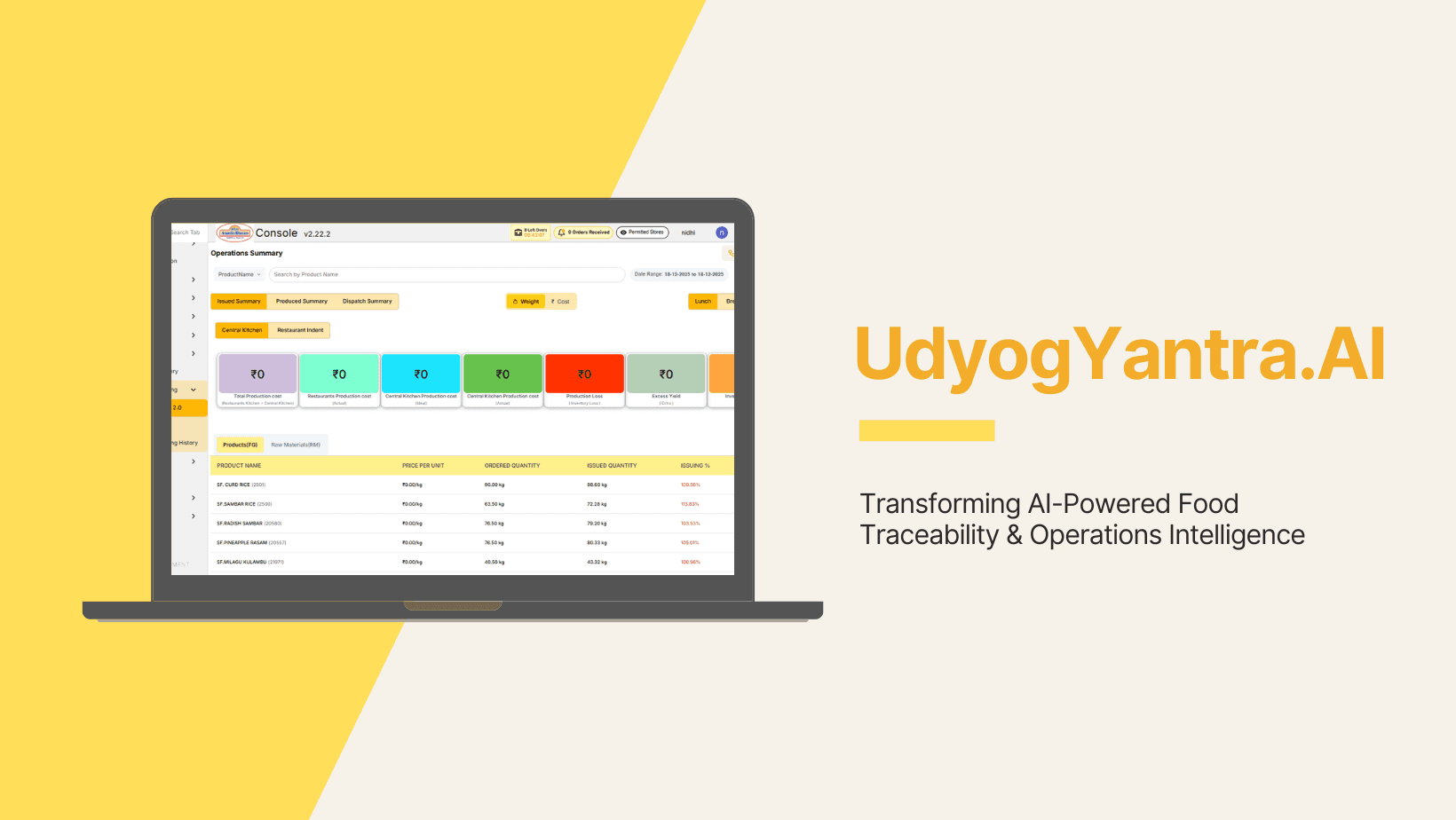
UdyogYantra.AI is a food traceability and operations intelligence platform designed to help food enterprises monitor sourcing, production, and distribution through automation and real-time data visibility.
During my tenure, I worked on redesigning critical ERP workflows, improving mobile scanning usability, and simplifying machine-driven production tracking experiences across multiple stakeholders including factory operators, warehouse teams, and business managers.
My Role
UI UX Designer
Tools
Figma • Research • Data Visualization • Prototyping
Duration
1.5 years
Users & Stakeholders
• Operators / Floor Staff (Key Users)
• CXOs / Business Owners
• Managerial / Supervisory Level
• Kitchen / Production Operators
Problem Statement
Food businesses relied heavily on manual workflows, fragmented dashboards, and disconnected operational data, resulting in:
• Poor visibility into raw material and finished goods movement
• Manual documentation errors affecting traceability
• Inefficient packaging and dispatch workflows
• Limited real-time monitoring of production output
• Low adoption of internal ERP tools due to complexity
This created operational delays, compliance risks, and data reliability challenges.
Goals
My goal was to transform UdyogYantra from a feature-heavy operational tool into a data-driven, workflow-focused platform that could:
• Improve usability for non-technical factory operators
• Reduce manual data entry across production workflows
• Enhance real-time operational monitoring
• Increase ERP adoption across teams
• Enable faster operational decision making
Key Contributions & Ownership
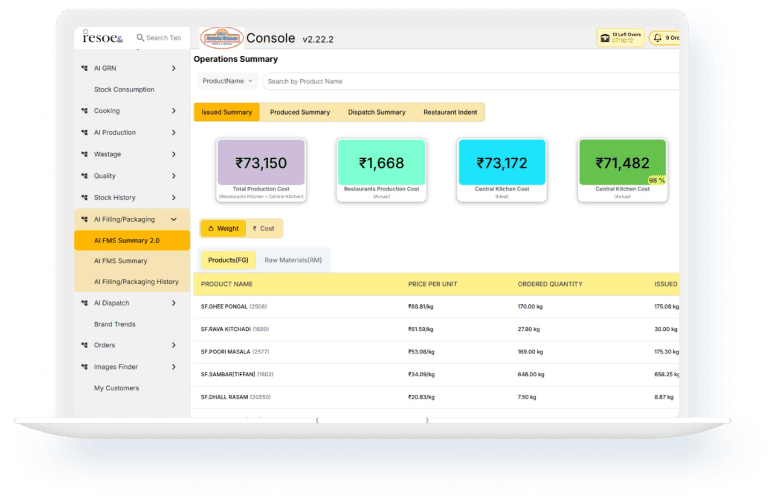
ERP Dashboard Experience Redesign
Challenge
The ERP dashboards contained dense operational data but lacked hierarchy and clarity, making it difficult for managers to extract actionable insights.
What I Did
• Redesigned dashboard information architecture
• Introduced KPI-focused data visualization blocks
• Simplified navigation and workflow grouping
• Created real-time profit/loss and operational tracking modules
• Improved audit trail visibility for compliance tracking
Impact
✅ Improved decision visibility for operations teams
✅ Reduced data interpretation time for managers
✅ Increased usability of analytics modules
Mobile Production & Dispatch App Optimization
Challenge
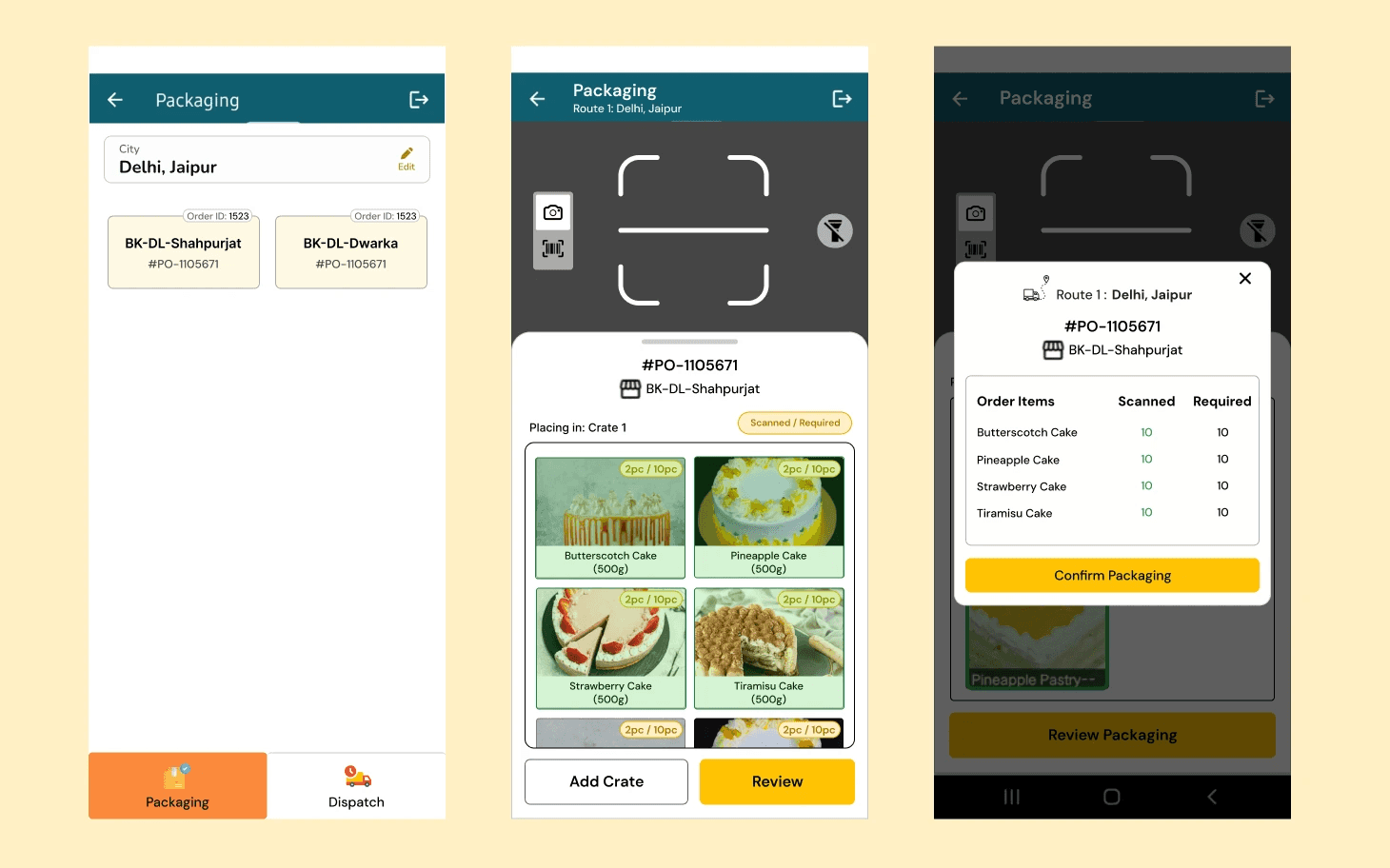
Factory operators struggled with complex interfaces and manual packaging confirmation workflows.
What I Did
• Designed mobile-first packaging and dispatch workflows
• Introduced QR-based scanning flows for production validation
• Simplified order tracking interfaces for supply teams
• Reduced cognitive load through step-based interaction design
• Created clear error and confirmation states
Impact
✅ Reduced manual entry dependency
✅ Improved packaging workflow efficiency
✅ Increased mobile app usability for field operators
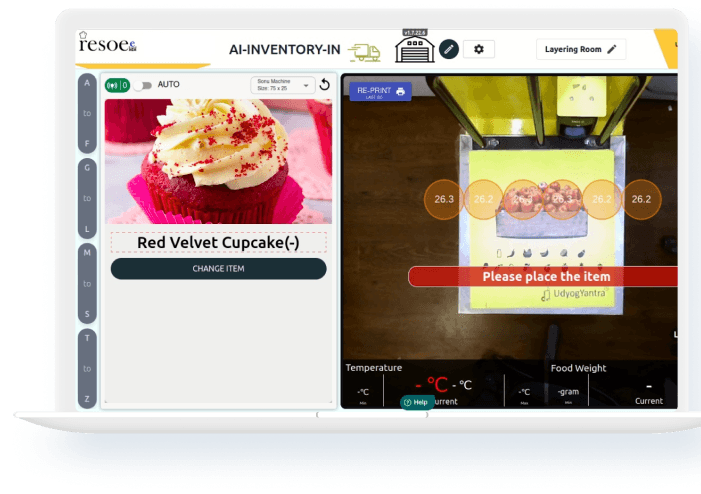
AI Machine Monitoring Interface Design
Challenge
AI-powered production monitoring generated valuable insights but was difficult for operators to interpret and act upon.
What I Did
• Designed machine monitoring dashboards displaying real-time production metrics
• Visualized product temperature, quality, and batch-level data
• Created alert-driven interfaces highlighting anomalies
• Simplified stock and dispatch tracking from AI sensors
Impact
✅ Enabled real-time production monitoring
✅ Improved visibility into product quality tracking
✅ Helped teams detect production deviations earlier
My UX Approach
I followed an iterative and research-driven workflow:
Research & Discovery
• Stakeholder discussions with product and operations teams
• Observed real production and packaging workflows
• Identified usability pain points across operator and admin roles
Information Architecture & Workflow Simplification
• Reorganized ERP data hierarchy
• Streamlined packaging and dispatch workflows
• Introduced progressive disclosure to reduce overload
Interaction & Visual System Improvements
• Designed structured dashboard layouts
• Improved mobile usability for high-frequency workflows
• Standardized visual components across ERP and mobile apps
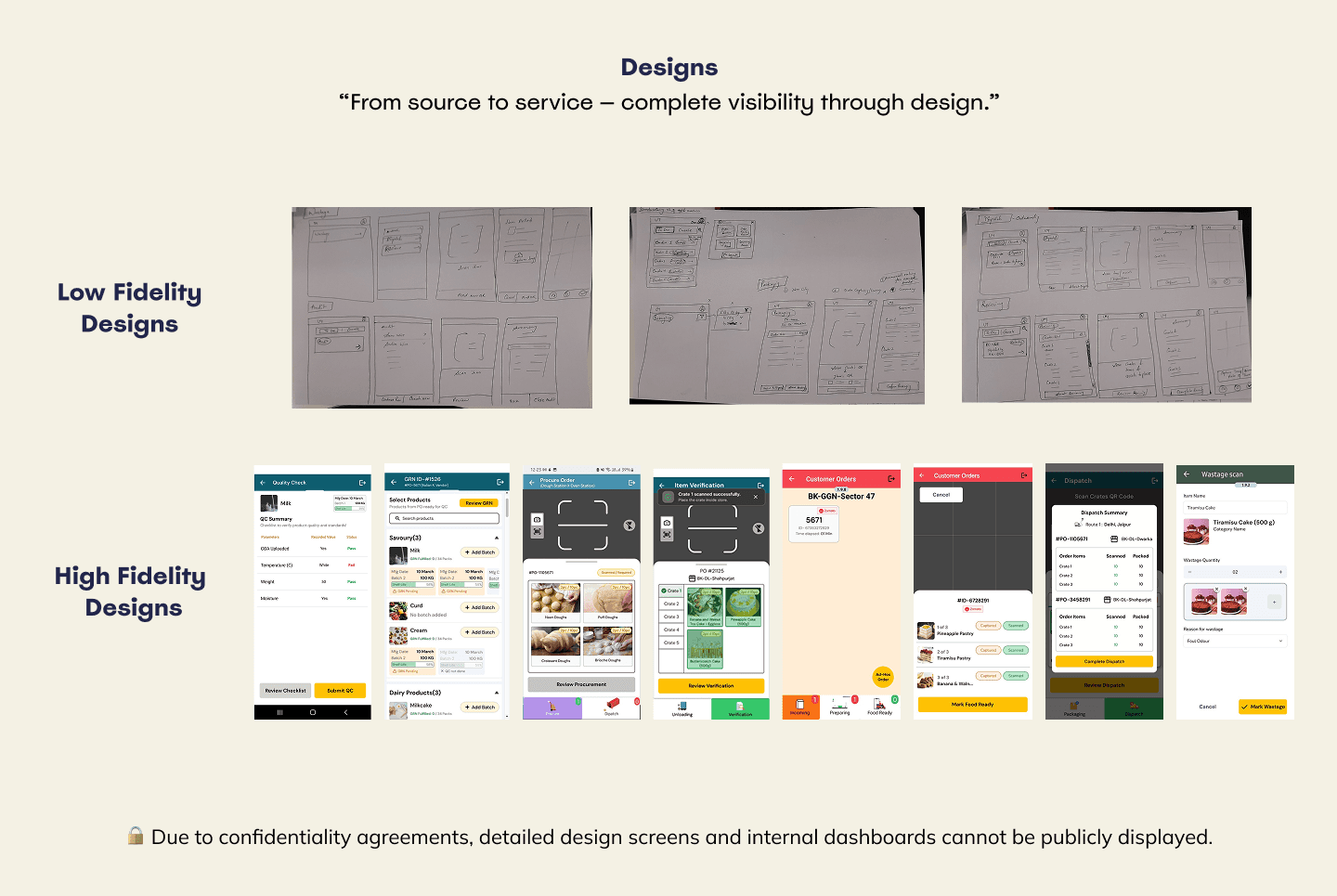
Skills & Methods Applied
• UX Research & Workflow Analysis
• Information Architecture Design
• Dashboard Data Visualization
• Mobile Interaction Design
• Usability Optimization for Industrial Users
• Cross-platform Design Consistency
• High Fidelity Prototyping & Design Systems
Measurable & Observed Outcomes
Through design improvements, the platform enabled:
✅ Faster production and dispatch validation workflows
✅ Improved operational data visibility
✅ Reduced manual reporting dependencies
✅ Higher usability for non-technical operators
✅ Stronger compliance tracking and audit readiness
Cross-Functional Collaboration
I worked closely with:
• Product Managers
• Engineering Teams
• Factory Operations Stakeholders
• CXOs, Managers
This helped ensure designs were technically feasible and aligned with real operational workflows.
Challenges I Solved
• Designing for low digital literacy industrial users
• Balancing real-time machine data with usability
• Simplifying ERP complexity without losing functionality
• Ensuring design scalability across multiple business modules
Key Learnings
Working on UdyogYantra strengthened my ability to:
• Design complex enterprise workflows
• Translate operational problems into intuitive digital experiences
• Build scalable dashboard visualization systems
• Design interfaces that bridge software + hardware ecosystems
• Prioritize usability in high-frequency industrial environments
Project Impact
UdyogYantra evolved from a fragmented operational tool into a unified traceability intelligence system supporting end-to-end food supply chain monitoring.
The platform now enables businesses to operate with higher transparency, automation, and data-driven decision making.